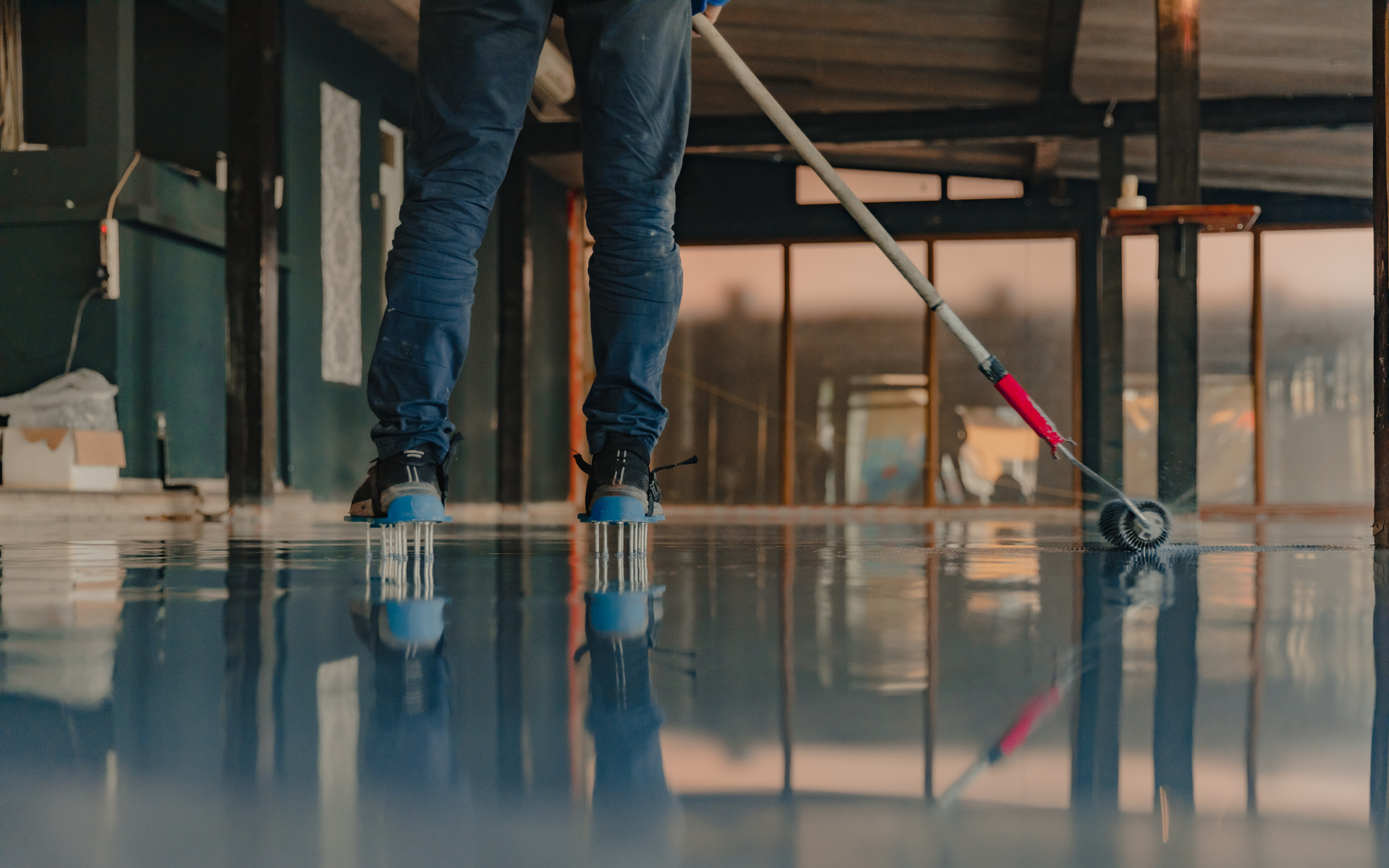
In commercial and institutional environments, epoxy flooring systems are selected not only for appearance but for long-term performance under demanding operational conditions. Across Southern California—from Los Angeles to San Diego—facilities require flooring systems that can withstand heavy traffic, chemical exposure, and strict maintenance standards while maintaining a clean, durable finish.
Wallock & Maggio has delivered specialty concrete and flooring systems since 1977, supporting projects where surface performance, substrate preparation, and installation precision are critical to long-term success.
Performance Requirements for Epoxy Flooring in Commercial Environments
Epoxy flooring systems are commonly specified in environments where durability, hygiene, and chemical resistance are essential. These systems are widely used in manufacturing facilities, institutional campuses, healthcare environments, retail support spaces, and entertainment infrastructure.
- Resistance to abrasion from heavy foot traffic and rolling equipment loads
- Chemical resistance for cleaning agents, oils, and industrial substances
- Seamless surface finish to support hygiene and sanitation requirements
- Impact resistance under operational use conditions
- Long service life with minimal disruption to facility operations
In Southern California projects, additional considerations often include temperature variation, seismic movement, and slab moisture variability, all of which influence system selection and installation approach.
Substrate Preparation and System Performance
The performance of an epoxy flooring system is directly dependent on substrate preparation. Even high-performance resin systems will fail if applied over improperly prepared concrete.
Concrete slabs often contain inconsistencies such as surface laitance, curing compounds, or residual contaminants that must be removed prior to installation. Mechanical preparation methods such as grinding or shot blasting are typically used to achieve the required surface profile for adhesion.
Moisture vapor transmission is another critical factor in slab evaluation. In slab-on-grade construction, elevated moisture levels can compromise epoxy bond strength and lead to blistering or delamination if not properly addressed. In these cases, vapor mitigation systems are often required before installation.
Proper substrate preparation ensures the epoxy system can achieve full adhesion and long-term performance under operational conditions. Learn more about related preparation work through our floor leveling solutions.
Environmental Conditions in Southern California
Southern California construction environments present unique challenges that directly influence flooring system performance. Coastal humidity, inland heat exposure, and seismic activity all contribute to long-term substrate movement and material stress.
In high-traffic commercial and institutional facilities, these conditions require flooring systems that can accommodate subtle movement while maintaining structural integrity and surface performance.
In markets such as Los Angeles, Orange County, and coastal Ventura County, architects and contractors often specify epoxy systems based on both performance requirements and environmental durability.
Integration with Concrete Polishing and Hybrid Flooring Systems
In many commercial projects, epoxy flooring systems are integrated with polished concrete or other architectural finishes depending on functional zoning within the facility.
Polished concrete is often used in architectural or public-facing areas due to its reflective, low-maintenance surface. Epoxy systems are typically applied in operational zones where chemical resistance and surface protection are required.
More information on complementary systems can be found through concrete polishing services.
Installation Planning and Coordination
Epoxy flooring installation requires coordination between multiple project stakeholders, including general contractors, architects, and facility managers. Proper sequencing is essential to prevent contamination and ensure installation conditions remain within specification.
- Scheduling installation after major overhead construction is complete
- Protecting prepared surfaces from dust and site traffic
- Ensuring environmental conditions remain within acceptable curing ranges
- Coordinating with other flooring or finishing trades
Wallock & Maggio emphasizes pre-installation evaluation to identify substrate conditions and project constraints before system selection.
Maintenance and Long-Term Performance
While epoxy flooring systems are known for durability, long-term performance depends on appropriate maintenance practices. Routine cleaning, avoidance of abrasive tools, and periodic inspections help preserve surface integrity.
In high-use environments such as institutional campuses or logistics facilities, maintenance planning is often integrated into broader facility management strategies.
Learn more about repair and long-term upkeep through our concrete repair services.
Final Considerations for Epoxy Flooring Systems
Epoxy flooring systems continue to play a critical role in commercial and institutional construction across Southern California. When properly specified and installed, they provide long-term performance in environments where durability, hygiene, and operational reliability are essential.
Wallock & Maggio applies decades of experience in specialty concrete systems to deliver flooring solutions tailored to complex commercial requirements.
For project consultation, contact Wallock & Maggio to discuss your upcoming flooring system requirements.