Concrete is a fundamental building material in commercial and institutional construction, valued for its strength, durability, and versatility. However, even well-constructed concrete structures can develop deterioration over time due to environmental exposure, repeated loading, water intrusion, material movement, and normal wear. When damage occurs, identifying its cause and selecting an appropriate repair strategy are important steps in maintaining the performance and service life of the structure.
Commercial concrete repair involves more than addressing visible cracks or damaged surfaces. Each project requires an understanding of the existing concrete, the extent of deterioration, and the conditions affecting the structure. For general contractors, architects, developers, and facility managers, evaluating these factors helps determine whether localized repairs, broader restoration work, or more extensive intervention is necessary.
Common Causes of Concrete Deterioration in Commercial Buildings
Concrete deterioration can result from several factors, and the underlying cause often determines the appropriate repair approach. Commercial buildings experience different operating conditions depending on their use, location, structural design, and exposure to environmental elements.
Common contributors to concrete damage include:
- Water infiltration: Moisture entering concrete through cracks, joints, or porous surfaces can contribute to deterioration and corrosion of embedded reinforcement under certain conditions.
- Environmental exposure: Temperature changes, weather exposure, and repeated wetting and drying can gradually affect concrete surfaces.
- Structural movement: Settlement, loading conditions, and movement within a building can contribute to cracking and other forms of damage.
- Repeated traffic and loading: Industrial equipment, vehicle traffic, and heavy use can cause surface wear and deterioration in high-demand environments.
- Construction-related deficiencies: Inadequate curing, improper material placement, or other construction issues may contribute to premature concrete deterioration.
Understanding the conditions responsible for the damage is essential. Repairing visible symptoms without addressing the underlying cause may allow deterioration to continue after the restoration work is completed.
Identifying Common Types of Concrete Damage
Commercial concrete structures can experience several types of deterioration, ranging from minor surface defects to conditions that require more extensive investigation. Recognizing the differences helps project teams determine the appropriate next steps.
Cracking: Concrete cracks can develop due to shrinkage, temperature changes, settlement, loading, or structural movement. Some cracks are primarily cosmetic, while others may indicate more significant underlying conditions. Their location, width, pattern, and progression should be evaluated before selecting a repair method.
Spalling and surface deterioration: Spalling occurs when portions of the concrete surface break away, leaving exposed or damaged areas. It can result from corrosion of reinforcing steel, environmental exposure, impact, or other deterioration mechanisms.
Delamination: Delamination involves separation between layers of concrete or near-surface material. It may not always be immediately visible and can sometimes be identified through inspection methods such as sounding.
Joint deterioration: Construction and control joints can deteriorate due to repeated traffic, movement, impact, or breakdown of joint materials. Damaged joints may affect the performance and serviceability of commercial concrete floors and other surfaces.
Each condition requires an appropriate evaluation. Treating all concrete damage as a surface repair issue can overlook more serious problems that need additional investigation.
Evaluating Existing Concrete Before Selecting a Repair Method
A successful commercial concrete repair project begins with assessing the condition of the existing structure. The evaluation should identify the location and extent of the damage, determine whether deterioration is active, and establish whether the affected concrete remains suitable for repair.
Depending on the project, an assessment may include:
- Visual inspection of cracks, spalling, exposed reinforcement, and surface deterioration.
- Evaluation of crack patterns and evidence of ongoing movement.
- Identification of moisture intrusion and other environmental exposure conditions.
- Assessment of damaged joints and areas subject to repeated loading.
- Investigation of potentially affected reinforcement or underlying concrete.
- Review of structural requirements and applicable project specifications.
Where damage may affect structural capacity or involve significant movement, a qualified structural engineer may need to investigate the condition and establish the appropriate repair requirements. This distinction is particularly important in commercial and institutional buildings where safety, occupancy, and long-term performance are critical considerations.
Concrete Repair Methods and Material Considerations
The appropriate repair method depends on the type of deterioration, the condition of the existing concrete, the intended use of the area, and the performance requirements of the project. Material selection should be based on compatibility with the existing substrate and the conditions the repaired area will experience.
Common concrete repair approaches include:
- Crack repair: Depending on crack characteristics and project requirements, repair may involve suitable injection materials, sealants, or other specified treatment methods. Active cracks and structural cracks require particular attention before a repair approach is selected.
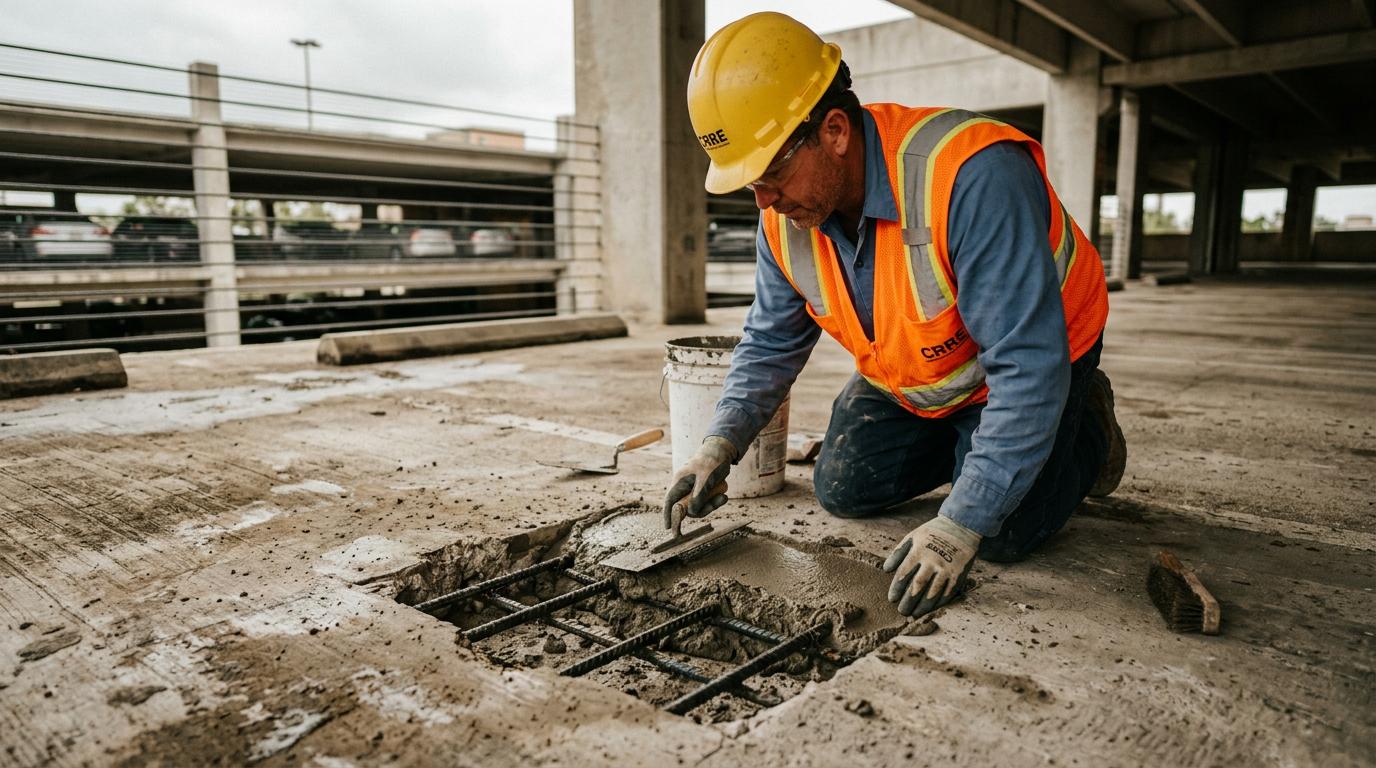
- Spall repair: Deteriorated concrete is removed to sound material, followed by appropriate preparation and placement of a compatible repair mortar or concrete repair material.
- Joint restoration: Damaged joint materials may be removed and replaced with suitable joint systems designed for the expected movement and traffic conditions.
- Surface restoration: Localized surface damage may be addressed using compatible repair materials or resurfacing systems, depending on the extent of deterioration and the intended finish.
Material compatibility, bond performance, curing requirements, and exposure conditions should all be considered during specification and installation. Selecting a repair product based only on the visible appearance of the damage may not provide the performance required for a demanding commercial environment.
Concrete Repair vs. Replacement: What Project Teams Should Consider
Not every damaged concrete surface requires complete replacement. In many situations, localized repairs or broader restoration work may be appropriate when the existing concrete remains structurally suitable and the deterioration can be addressed effectively.
However, extensive deterioration, significant structural deficiencies, widespread reinforcement corrosion, or recurring damage may require more substantial intervention. The decision between repair and replacement should consider the extent of damage, the condition of surrounding concrete, the intended service life, and the practical requirements of the facility.
Project teams should also evaluate access, construction sequencing, operational disruptions, and the compatibility of proposed repairs with adjacent building materials. For occupied commercial facilities, minimizing disruption while maintaining appropriate construction standards can be an important part of the overall project strategy.
A condition assessment helps establish whether localized restoration can meet the project’s objectives or whether a more comprehensive solution should be considered.
Coordinating Concrete Restoration with Other Construction Work
Concrete repair is frequently connected to other construction and building improvement activities. Restoration work may need to be coordinated with waterproofing, deck coatings, flooring installations, structural improvements, or other specialty construction systems.
For example, repairing a concrete deck before applying a waterproofing system requires attention to the condition of the substrate, joints, cracks, and areas exposed to water. Similarly, repairing an existing concrete floor before installing a new finish requires consideration of material compatibility and the performance requirements of the finished system.
Coordinating these activities during project planning helps ensure that repair work supports the broader construction objectives. It also gives contractors and project managers an opportunity to identify dependencies between trades, material installations, and required curing periods.
Concrete Repair Considerations for Southern California Projects
Commercial and institutional properties throughout Southern California experience a variety of environmental and operational conditions. Projects in Los Angeles, Ventura, San Diego, the Central Coast, and surrounding communities may involve aging concrete structures, exposed decks, parking areas, industrial facilities, and heavily used commercial spaces.
Coastal exposure, moisture intrusion, temperature variations, and repeated traffic can all influence the condition of concrete over time. Restoration strategies should account for the actual exposure conditions and the intended use of the repaired area rather than relying on a uniform approach for every project.
Wallock & Maggio provides specialty concrete and flooring solutions for commercial, institutional, and high-end residential projects. Its approach to concrete restoration considers the existing substrate, project requirements, and the performance expectations of the finished work.
For upcoming commercial construction or restoration projects, learn more about Wallock & Maggio’s concrete repair services or contact the team to discuss your project requirements.