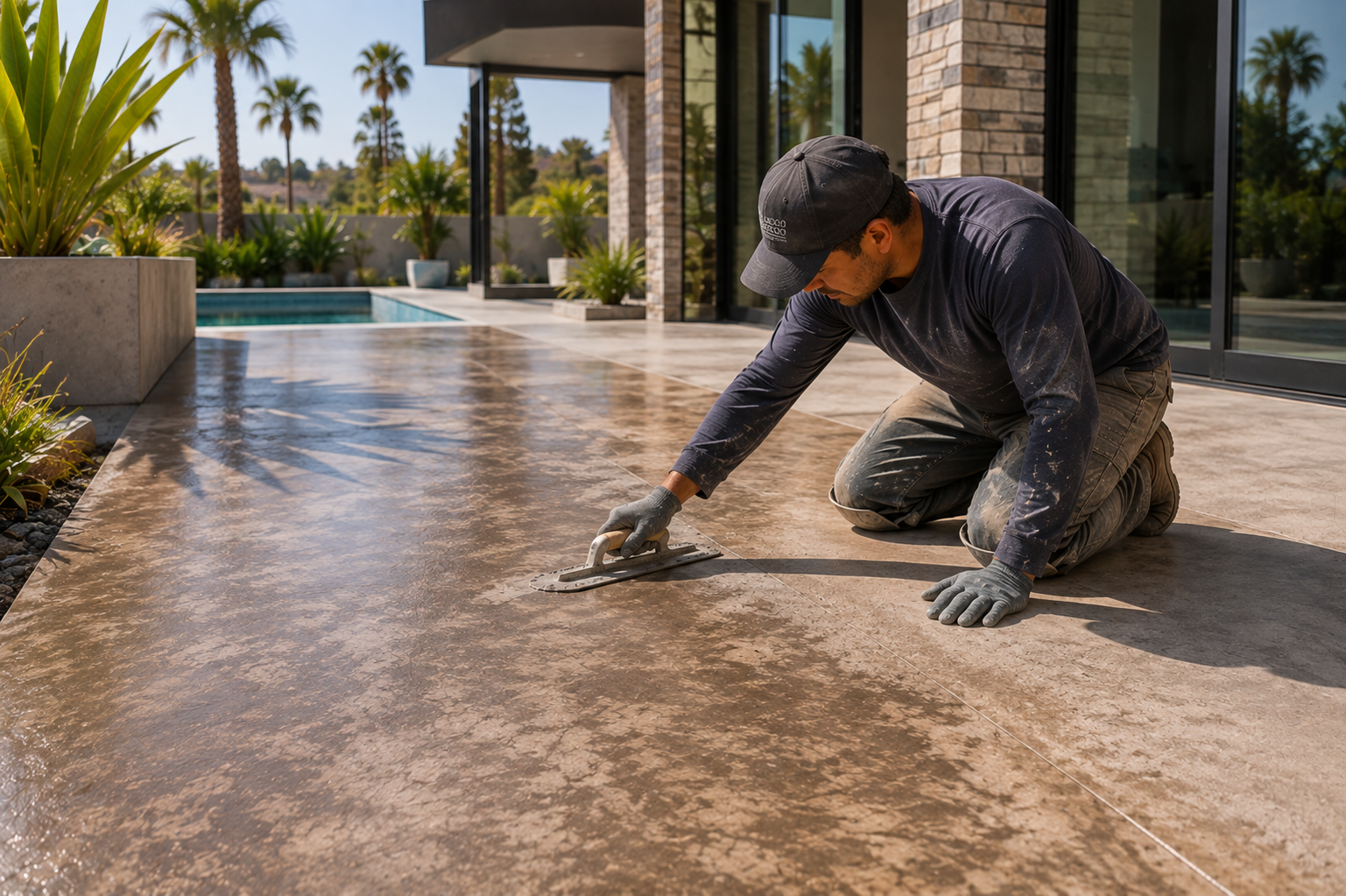
Decorative concrete has become an increasingly versatile option for projects where the finished surface needs to provide both visual character and long-term performance. Rather than treating concrete as purely structural, architects, designers, builders, and property owners can use specialized finishes to create surfaces that complement the overall design of a commercial, institutional, or high-end residential project.
In Southern California, decorative concrete can be particularly useful across interior and exterior environments where appearance, durability, and resistance to everyday use need to work together. From architectural floors and patios to walkways and other finished surfaces, the right system can provide a refined appearance without sacrificing the performance expected from concrete.
What Are Decorative Concrete Finishes?
Decorative concrete encompasses a range of finishing techniques and systems that modify the appearance or texture of a concrete surface. Depending on the project requirements, finishes can introduce color, texture, patterns, or other architectural characteristics while maintaining the underlying advantages of concrete.
These systems can be applied to new concrete or, in appropriate circumstances, used to transform existing surfaces. This makes decorative concrete relevant not only to new construction but also to renovation and restoration projects where replacing an existing surface may not be necessary.
The appropriate finish depends on the substrate, intended use, environmental exposure, design objectives, and expected maintenance requirements.
Balancing Design and Performance
For commercial and high-end residential projects, appearance is only one consideration when specifying a decorative concrete system. The finished surface also needs to perform within the conditions of the space.
Project teams may need to consider:
- Expected pedestrian or vehicle traffic
- Interior or exterior exposure
- UV and weather conditions
- Cleaning and maintenance requirements
- Existing substrate conditions
- Desired texture, color, and visual consistency
- Compatibility with surrounding architectural materials
A decorative finish that looks appropriate during installation may not be suitable for a high-traffic commercial environment if its performance requirements have not been properly evaluated. For this reason, design decisions should be coordinated with the technical requirements of the concrete surface.
Decorative Concrete for Commercial and Institutional Projects
Commercial and institutional environments often require finishes that can withstand regular use while contributing to the character of the space. Decorative concrete can be incorporated into areas such as entryways, courtyards, walkways, hospitality spaces, retail environments, and other architectural features.
For design teams working in Los Angeles, Ventura, San Diego, the Central Coast, and surrounding Southern California communities, decorative concrete can provide flexibility when a project calls for a finished surface that is durable but does not need to look purely utilitarian.
The system should be selected according to the function of the space rather than appearance alone. A heavily trafficked commercial area, for example, may require a different finish and maintenance approach than a residential outdoor entertaining area.
Microtoppings and Overlays for Existing Concrete
Existing concrete does not always need to be completely removed to achieve a new architectural appearance. When the underlying substrate is suitable, thin resurfacing systems can provide an opportunity to update an existing surface while preserving the base material.
Microtoppings and overlays can be used to create a refreshed surface with a range of aesthetic possibilities. These systems can be particularly useful during renovation projects where minimizing demolition and maintaining the existing substrate are important considerations.
Before an overlay is specified, however, the existing concrete should be evaluated for cracks, deterioration, moisture conditions, movement, and other factors that could affect the performance of the finished system.
Exterior Decorative Concrete in Southern California
Exterior concrete surfaces face different conditions than interior applications. Sun exposure, temperature changes, rain, foot traffic, and water drainage can all influence the long-term performance of an exterior decorative finish.
Southern California’s climate creates opportunities for extensive use of outdoor concrete across residential and commercial properties, but the environmental conditions still need to be considered during system selection and installation.
Where an exterior surface is exposed to significant moisture, waterproofing may also be part of the overall design strategy. Concrete waterproofing and deck coating systems can help protect appropriate concrete surfaces from water intrusion and long-term moisture-related deterioration.
Decorative Concrete in High-End Residential Projects
Decorative concrete is also well suited to high-end residential environments where the finished surface is an important part of the architectural design. Floors, patios, walkways, outdoor living areas, and other concrete elements can be customized to complement the surrounding materials and overall aesthetic.
One advantage of decorative concrete is the range of visual possibilities available compared with conventional unfinished concrete. The finish can be coordinated with the architectural palette while retaining the strength and versatility associated with concrete construction.
For residential projects in areas such as Malibu, Santa Barbara, and the greater Los Angeles region, the finish may need to integrate with both interior and exterior design elements while meeting practical requirements for everyday use.
Specifying Decorative Concrete During the Design Phase
Early coordination between architects, designers, general contractors, and specialty concrete contractors can help establish realistic expectations for the finished surface. Specifications should account for the existing or proposed concrete substrate, desired appearance, environmental conditions, traffic levels, and maintenance requirements.
It is also important to distinguish between the visual objective and the technical system required to achieve it. Two surfaces may have a similar appearance while requiring very different installation methods or substrate conditions.
Discussing these factors during the design and planning stages can help reduce changes later in construction and provide a clearer path from the design concept to the completed surface.
Why Craftsmanship Matters for Decorative Concrete
Decorative concrete places a greater emphasis on consistency and workmanship because the finished surface is part of the visual design. Surface preparation, material application, detailing, transitions, and finishing techniques can all affect the final result.
Wallock & Maggio has provided specialty concrete solutions throughout Southern California since 1977, with experience spanning commercial, institutional, residential, restoration, and decorative applications. The company’s portfolio includes work for recognized organizations and complex project environments, supporting an approach that combines technical concrete expertise with attention to finished appearance.
For projects where concrete needs to function as both a durable construction material and an architectural finish, early planning and careful system selection can help achieve a result that remains visually appropriate and functional over time.
Contact Wallock & Maggio to discuss your decorative concrete requirements and determine an appropriate finish for your upcoming project.