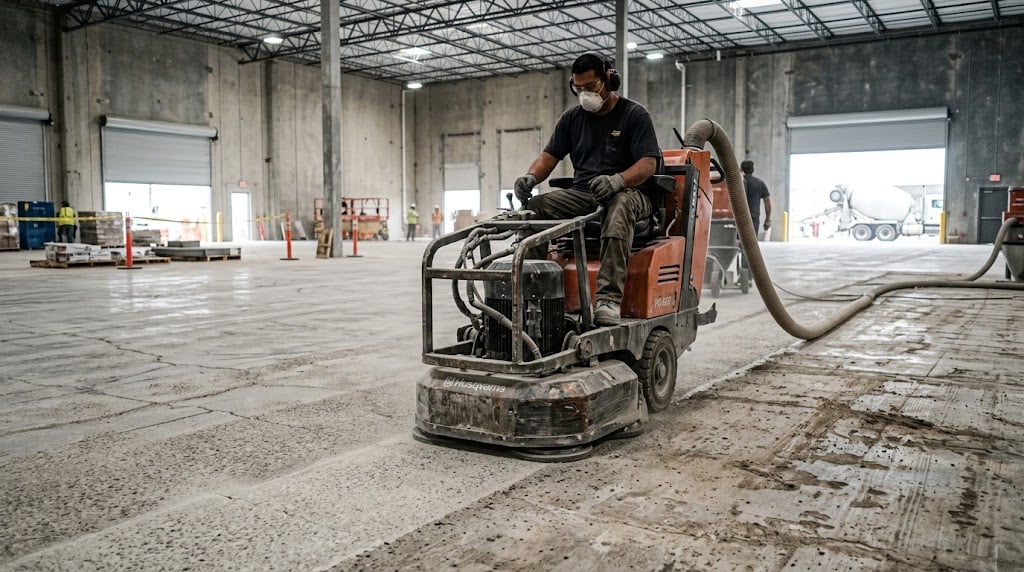
Commercial flooring systems are only as reliable as the surface beneath them. Before an epoxy coating, polished concrete system, microtopping, or other specialty finish is installed, the existing concrete must be properly evaluated and prepared. Surface condition, moisture, cracks, contamination, and variations in the substrate can all affect how a flooring system performs after installation.
For commercial and institutional projects, proper floor preparation is particularly important because flooring is often exposed to heavy foot traffic, equipment, rolling loads, chemicals, cleaning procedures, and other demanding conditions. A thorough preparation process helps create the foundation needed for a durable, consistent, and visually refined finished floor.
Evaluating the Existing Concrete Substrate
Floor preparation begins with understanding the condition of the existing substrate. A visual inspection can identify obvious defects, but commercial projects may require a more detailed assessment before preparation methods and flooring materials are selected.
Contractors may evaluate the concrete for surface deterioration, cracks, uneven areas, previous coatings, contaminants, and other conditions that could affect the new flooring system. The intended use of the space should also be considered because a floor designed for an office environment may have very different performance requirements from one exposed to forklifts, manufacturing equipment, or institutional traffic.
Identifying these conditions early allows the preparation process to address potential problems before the finish flooring is installed.
Removing Contaminants and Unsuitable Materials
Concrete surfaces can accumulate materials that interfere with the bond between the substrate and a new flooring system. Oil, grease, dirt, curing compounds, adhesives, old coatings, and other contaminants may prevent a coating or overlay from properly adhering to the concrete.
Mechanical preparation methods can help remove these materials and expose a suitable surface for the next stage of the installation. The appropriate method depends on the existing substrate and the flooring system being specified.
Removing unsuitable materials is not simply a cosmetic step. A clean and properly prepared surface provides a more consistent foundation for the flooring system and can reduce the risk of adhesion-related failures.
Creating the Appropriate Surface Profile
Many commercial flooring systems require the concrete surface to have an appropriate profile before installation. Mechanical preparation can open the surface and create the texture needed for the selected flooring material to bond effectively with the substrate.
The required surface profile depends on the type of flooring system being installed. Preparation for a high-performance resinous coating may differ from preparation for polished concrete or a decorative overlay.
Matching the preparation method to the specified flooring system is therefore an important part of the installation process. Over-preparation can unnecessarily affect the substrate, while inadequate preparation may leave the surface unsuitable for the intended finish.
Addressing Cracks and Surface Defects
Existing concrete may contain cracks, spalled areas, pits, or other surface defects that need to be addressed before a new flooring system is installed. These conditions can affect the appearance and performance of the finished surface if they are simply covered without appropriate treatment.
Depending on the severity and location of the damage, preparation may include repairing deteriorated concrete, filling appropriate cracks or voids, and correcting localized surface deficiencies.
Commercial concrete repair should be considered as part of the overall flooring strategy when the existing substrate has deterioration that could compromise the finished system.
Correcting Uneven Areas Before Flooring Installation
Flatness and levelness can be important considerations for commercial flooring projects, particularly in spaces where equipment, partitions, furnishings, or other building components depend on a consistent floor surface.
Localized variations in the substrate may require additional preparation or leveling before the final flooring system is installed. Addressing these conditions beforehand can help produce a more uniform finished surface and prevent the flooring material from simply following irregularities in the existing concrete.
For projects where significant substrate variations are present, commercial floor leveling can be an important part of the preparation process.
Considering Moisture Before Installation
Moisture conditions within a concrete slab can have a significant impact on flooring installation. This is particularly important when installing systems that are sensitive to moisture or when the project involves an existing slab with uncertain history or environmental exposure.
Moisture evaluation should be considered before the flooring system is selected and installed. If excessive moisture or vapor transmission is identified, a suitable mitigation strategy may be necessary before the final flooring system is applied.
Addressing moisture conditions during preparation helps reduce the likelihood of problems developing after installation and allows the flooring system to be selected based on actual site conditions.
Preparing Different Commercial Flooring Systems
Not every flooring system requires the same preparation process. The substrate requirements should be considered alongside the characteristics and intended use of the finished system.
- Epoxy and resinous flooring: Requires a properly prepared and profiled substrate to support adhesion and system performance.
- Polished concrete: Requires careful assessment of the existing concrete because the final appearance depends substantially on the condition and characteristics of the slab.
- Microtoppings and overlays: Require a suitable, stable substrate with surface conditions appropriate for the specified material.
- Decorative concrete systems: Require preparation that supports both the performance and visual requirements of the finished surface.
The preparation process should therefore be developed around the flooring system rather than treated as a one-size-fits-all procedure.
Why Preparation Matters for Long-Term Performance
Commercial flooring systems are expected to perform under demanding conditions for years. When the substrate has been properly evaluated and prepared, the flooring installation has a more appropriate foundation for adhesion, durability, and consistent appearance.
Proper preparation can also make it easier to identify potential issues before they become part of the finished floor. Addressing substrate problems during construction is generally more practical than discovering them after the flooring system has been installed and the facility is back in operation.
For architects, general contractors, developers, and facility managers, incorporating substrate evaluation and preparation into the project planning process can help establish realistic expectations for both installation and long-term performance.
Planning Floor Preparation for Southern California Projects
Commercial and institutional construction throughout Southern California can involve a wide range of existing substrates, building types, and operating environments. Projects in Los Angeles, Ventura, San Diego, the Central Coast, and surrounding areas may require different preparation strategies depending on the existing concrete and the requirements of the finished space.
Wallock & Maggio approaches floor preparation as an integral part of the flooring installation process. Evaluating the substrate, identifying potential problems, and selecting appropriate preparation methods can help establish the conditions required for a durable and properly executed commercial flooring system.
For upcoming commercial or institutional projects, contact Wallock & Maggio to discuss your flooring and substrate preparation requirements.